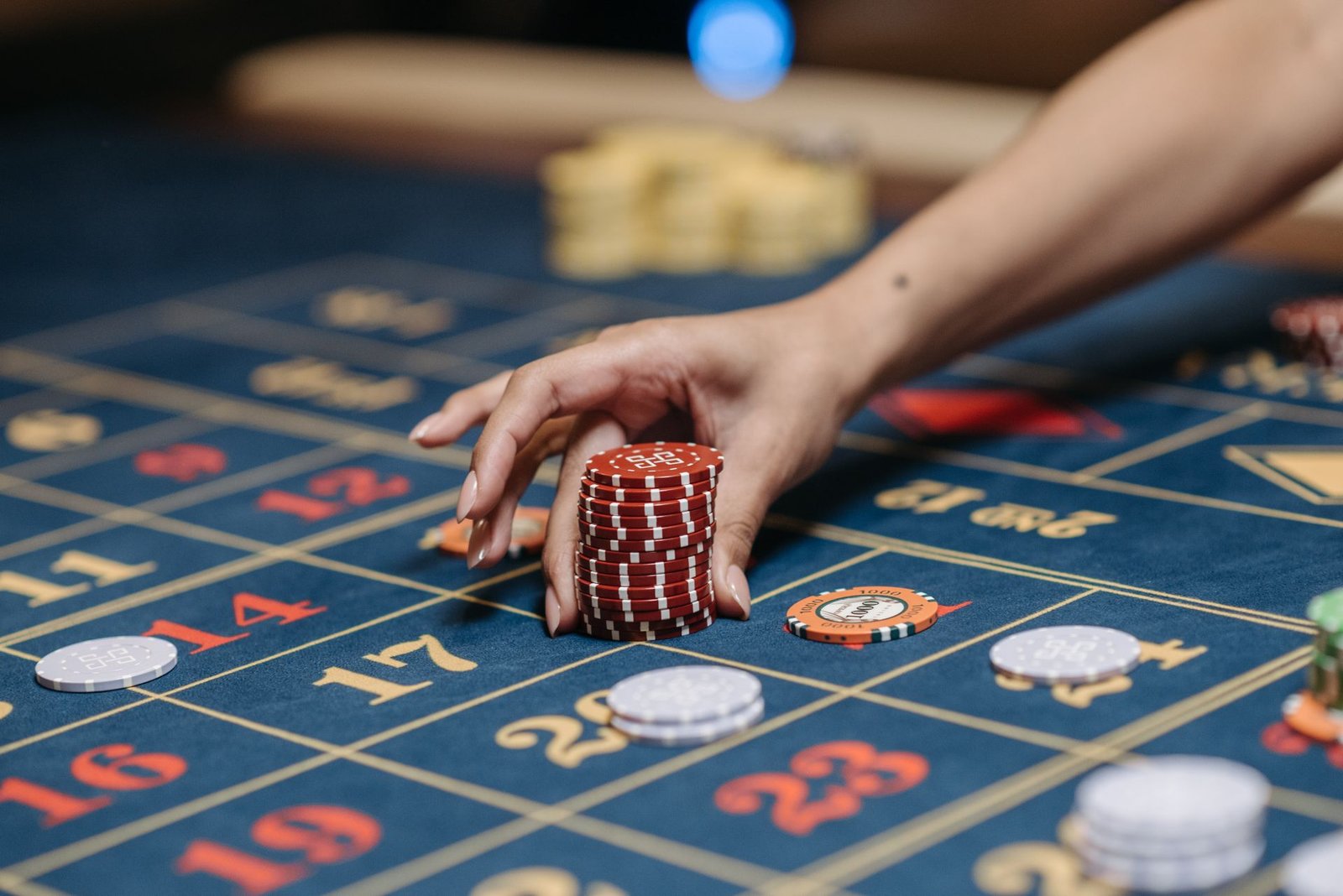
Oshi session pacing can borrow a surprisingly useful idea from fantasy league management: every decision should have a defined unit budget before the action starts. Fantasy players allocate limited capital across a long season, while pokie players manage money across a sequence of spins where variance can change the session quickly. The comparison is not about predicting winners. It is about controlling exposure. For players exploring Oshi online casino, that framework can make recreational pokie sessions more structured and easier to stop.
A fantasy manager does not normally spend the entire budget on one fixture. Likewise, a sensible pokie session should not expose the whole bankroll to a short run of spins. Instead, divide the available entertainment budget into fixed units and decide beforehand how many units belong to the session.
The biggest difference is obvious. Fantasy contests can reward skill, research, and lineup construction, whereas pokies remain games of chance with programmed mathematical outcomes. Therefore, fantasy-style pacing should only be used as a bankroll framework, never as a claim that better timing creates better slot results.
That distinction matters. A good unit system manages your behavior, not the machine.
How Does Oshi Session Pacing Compare With Fantasy League Unit Management?
Fantasy sports already use a capital-allocation mindset. A player has a finite budget, assigns portions to different contests, tracks results, and adjusts future exposure based on performance. Pokie management can use the same organizational logic while accepting that the underlying probabilities are different.
| Factor | Fantasy League Approach | Pokie Session Approach |
|---|---|---|
| Capital | Contest or lineup budget | Entertainment bankroll |
| Unit | Fixed stake allocation | Fixed spin or session allocation |
| Variance | Player and matchup volatility | Game volatility and payout frequency |
| Adjustment | Changes based on results and context | Preferably changes only between sessions |
| Performance | ROI, finish rate, profit | Session spend, duration, and net result |
The important trade-off is flexibility. Fantasy players can adjust lineups because information changes before contests lock. Pokie outcomes do not become more favorable because a previous spin lost, so changing your stake after every result can easily become emotional rather than analytical.
Use fantasy-style discipline for your bankroll, not fantasy-style expectations for random outcomes.
Why Oshi Session Pacing Starts With Fixed Units
Suppose your entire entertainment budget for the evening is $60. Rather than thinking of that as sixty dollars available to lose, divide it into six $10 units. You might allocate three units to the first phase and keep three outside the gambling balance.
That structure creates a hard boundary. A losing sequence consumes units, not an undefined pool of cash that can be replenished whenever frustration appears.
For an even tighter approach, define a maximum number of spins within each unit. For example, a $10 unit could support a predetermined number of small wagers. Once the unit is exhausted, the session pauses rather than automatically escalating the bet size.
This does not improve expected return. Instead, it limits how quickly a volatile game can consume the budget.
Which Oshi Session Pacing Model Handles Variance Best?
Not every pokie has the same volatility profile. Some games can produce frequent smaller payouts, while others may produce longer dry stretches interrupted by larger wins. That difference should influence unit sizing.
A simple framework is to use smaller units on games you consider more volatile and slightly larger units only when the overall entertainment budget still remains fixed. The total budget should never increase merely because the game advertises a larger potential multiplier.
- Low-volatility game: smaller swings may make a fixed unit last longer.
- Medium-volatility game: expect greater variation between winning events.
- High-volatility game: use tighter units because drawdowns can arrive quickly.
- Unknown game profile: start conservatively until you understand its payout behavior.
Variance is where many bankroll plans break. A player sees several losses, assumes a payout must be coming, and increases the next stake. That is a classic error because previous independent outcomes do not guarantee a correction on the next spin.
Therefore, Oshi session pacing should adjust between sessions, not react impulsively after every losing sequence.
Oshi Session Pacing Versus Aggressive Stake Scaling
Consider two weekend players. Player A keeps a $2 stake for the entire session and stops when the allocated budget is gone. Player B starts at $1, then moves to $2, $4, and $8 whenever losses accumulate.
Player B may describe the method as “recovering efficiently.” Mathematically, however, the approach accelerates capital exposure precisely when the bankroll is already under pressure.
Player A has less dramatic upside per spin, but the spending path is easier to predict. That predictability is valuable when gambling is supposed to remain entertainment rather than a recovery project.
Fantasy contests have a similar concept. A disciplined manager does not normally double every future entry simply because last week’s lineup failed. The same thinking belongs in pokie bankroll management.
How Should Oshi Session Pacing Change Across a Session?
A useful session can be divided into phases. The opening phase establishes whether the selected stake feels comfortable. The middle phase is where discipline matters most because fatigue and frustration can begin affecting decisions. The closing phase should follow a predefined stop rule rather than a desire to finish with a winning balance.
- Set the total entertainment budget before opening the game.
- Divide that amount into fixed units.
- Choose a maximum stake per spin.
- Set a session timer.
- Pause after each allocated unit.
- End the session when the planned budget or time limit is reached.
This structure creates deliberate checkpoints. After every unit, ask whether the session still feels entertaining and affordable. If the answer changes, stopping is a valid result.
Importantly, a winning balance should not automatically trigger a higher unit size. Increasing exposure because you are temporarily ahead converts a controlled session into a larger risk position.
Can Performance Metrics Improve Oshi Session Pacing?
Yes, provided the metrics describe behavior rather than pretending to predict random outcomes. Track total deposits, total session duration, average stake, number of sessions, and net result over time.
A simple performance sheet might contain:
- Starting entertainment budget.
- Number of units allocated.
- Average stake per spin.
- Total play time.
- Closing balance.
- Percentage of sessions stopped within budget.
The last metric is especially useful. If you consistently stop within your preset limits, the system is doing its job even when individual sessions lose money. If you regularly add deposits, increase stakes, or extend session times, the framework needs tightening.
Do not use short-term return as proof that one unit system is mathematically superior. A handful of sessions can be heavily influenced by variance. Longer records are better for evaluating spending behavior.
What Should Fantasy League Players Avoid When Using Oshi Session Pacing?
Next-generation digital gaming platforms have redefined online leisure by combining real-time streaming, studio-grade graphics, and adaptive software interfaces. Players can immerse themselves in dynamic game formats ranging from multi-wheel roulette and speed baccarat to innovative cluster-pay video pokies packed with interactive mini-games. When searching for an authentic, high-speed gaming experience, connecting to a top-tier casino australia portal guarantees access to elite software studios, instant-load lobbies, and custom UI options tailored for every screen size.
Beyond visual polish and game variety, modern platforms stand out through seamless banking integration and automated payment pipelines. Utilizing localized payment methods alongside instant-settlement e-wallets ensures players can execute rapid, fee-free withdrawals without unnecessary delays. Supported by certified Random Number Generators (RNG), robust SSL encryption, and comprehensive account controls—such as session reminders and loss limits—these operators offer a reliable, transparent environment where players can confidently enjoy real-money entertainment.
The biggest mistake is importing competitive fantasy logic too literally. Fantasy managers can search for information, model player projections, and exploit pricing inefficiencies. Pokie players do not gain the same kind of control over individual spin outcomes.
Another mistake is treating a larger remaining bankroll as permission to loosen discipline. If three units remain, they are still part of the original entertainment budget. They are not “house money” and should not automatically be wagered more aggressively.
Likewise, do not alter your unit size because a particular symbol has appeared frequently or because a bonus feature feels overdue. Random-game psychology often creates patterns that look meaningful without providing a reliable predictive advantage.
For a cleaner weekend experience, keep the framework boring. Fixed units. Fixed limits. Fixed stopping points.
When Is Oshi Session Pacing Working Properly?
The strongest indicator is consistency. You know the budget before the session, you understand the maximum exposure, and you can stop without needing another deposit.
Imagine starting with $50, divided into five $10 units. After two units disappear, you pause rather than moving another $20 into the account. That is successful pacing even though the session is losing money. The framework did exactly what it was designed to do.
Now imagine another player starts with $50, loses $30, and deposits another $50 because a bonus round feels close. The original pacing model has failed, regardless of whether the next spins eventually win.
The purpose is control. Winning is never guaranteed.
How Can You Build a Better Oshi Session Pacing Routine?
Start with an amount that would not affect essential spending if completely lost. Divide it into manageable units, then set both a time ceiling and a maximum stake. Keep those figures visible while playing.
Next, choose one game rather than jumping between titles after every disappointing sequence. Switching games will not reset probability or erase previous losses. It may simply make the session harder to track.
Finally, review your records after several sessions. Look for rising deposits, increasing average stakes, longer play times, or repeated attempts to recover losses. Those trends matter more than whether one evening happened to produce a large multiplier.
Oshi session pacing works best when it borrows the discipline of fantasy bankroll management without borrowing the fantasy of predictive control. Fixed units can restrict exposure, variance-aware sizing can reduce reckless swings, and simple performance metrics can reveal whether your habits remain within plan. The goal is not to outsmart random outcomes. It is to keep the session affordable, measurable, and enjoyable from the first spin to the final stop.